Categories
Should you use the slow or fast sublimation paper?
The sublimation paper is one of those essential elements in this sublimation printing technique since the choice of the type of paper will directly influence the sublimation process and, of course, the final printing result.
Oct 22nd,2021
2347 Views
The sublimation paper is one of those essential elements in this sublimation printing technique since the choice of the type of paper will directly influence the sublimation process and, of course, the final printing result.
Keep in mind that a quality sublimation paper keeps the ink dots as small as possible to achieve a high image quality. Also, for the transfer to be done correctly, there should be as little ink as possible left on the paper after heat transfer. The less ink left, the better the transfer will be made, which means that the paper is of high quality. So, this point is important to take into account because it will define the drying speed of the paper, or rather, its capacity to absorb and transmit the ink.
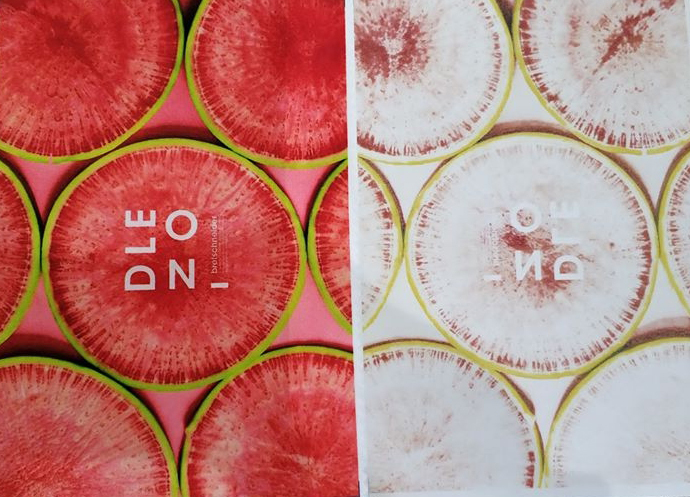
 Many customers have asked us about the slow-drying paper. We don’t know about it, and we are still wondering how anyone needs slow-drying paper. Later, we learned that slow-drying paper is low-gram paper.
However, it is a type of paper that usually gives some problems. Therefore, you need to know when to use it and the solutions to possible mistakes.
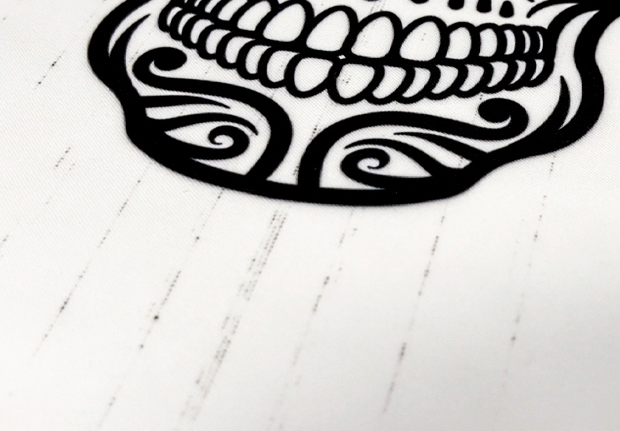
One of the main problems with using a slow drying sublimation paper is that the so-called "ant trail" can appear. But what is the "ant trail" in sublimation? Well, it is the trace that the printer roller leaves on the ink when dragging the paper.
This appears because the ink is still fresh on the paper and the front rollers of the printer when dragging the paper to print the design. That's when the rollers leave that mark on the sheet and it appears as a dotted line. Sometimes this problem is imperceptible on the paper, but it does transfer and is noticeable in the stamping.
So, when using fast-drying sublimation paper, these "ant trails" are avoided, since, as the ink dries more quickly, the rollers do not leave marks due to the fresh ink.
A possible solution to end this problem? Well, if you want to continue using lightweight sublimation paper, you can configure the printer to print unidirectionally. This will allow time for the ink to dry and soak well into the paper during printing. Thus, you will ensure the drying of the ink so that when the roller passes over the design the ink is not wet and there is no "ant trail".
After all, sublimation paper is an ink carrier. That is, the ink is transferred from the printed sheet to the product to be customized by the heat of the plate. For the design to transfer from the paper to the surface, the inks must be properly impregnated on the paper, but in this type of paper, the ink remains on the surface. If we do not wait for the ink to dry, there is a risk that the ink will migrate. For this, we have to pay attention to the grammage. The heavier the weight of the paper, the more ink it will be able to absorb and, therefore, the faster the inks will dry on paper.
The clearest consequence of using a slow-drying or light-weight paper is that it will take a little longer to finish your orders, that is, your production will be delayed and your work will accumulate. When the design is printed on this type of paper, it cannot be used immediately on the surface. This is because the ink is still wet and the transfer cannot be made with the transfer plate until it dries.
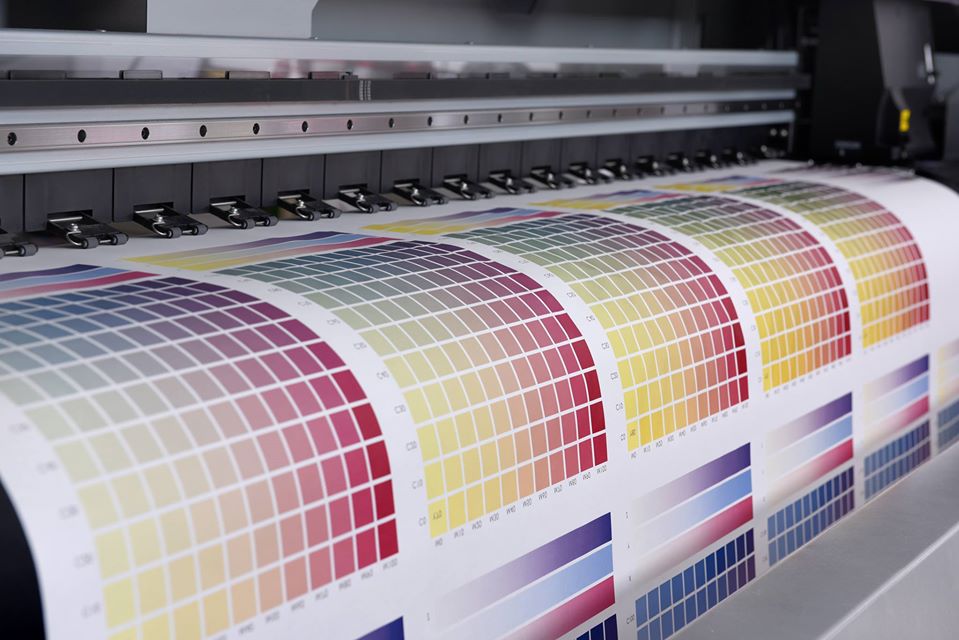 Once you know the characteristics of light-weight sublimation paper, also known as "slow", and heavier-weight or "fast" sublimation paper, you can choose the one that best suits your production needs. In your final choice, you will have to take into account the final printing effect. If it is a textile, choose a low grammage sublimation paper and if it is a rigid one, opt for the heavier grammage ones. Remember that if you do not wait long enough for it to dry and put it on the surface with the ink still wet, the color of the ink can migrate. Another recommendation so that your sublimation paper does not suffer changes is to store it in a dry place, that is to say, without humidity.
In conclusion, the best thing to do, without a doubt, is to always choose a quality sublimation paper according to the final printing effect.
Subtextile Co. Ltd.
Address:699-18 Xuanwu Avenue, Nanjing City, China, 210000
Tel |Fax:+86 25 85416407 (GLOBAL)
Cell:+86 17798509616
Whatsapp:0086 17798509616
E-mail:info@subtextile.com


