
In the DTF printing industry, many customers focus mainly on printer performance when choosing equipment, including printhead configuration, printing speed, resolution, and machine stability.
However, as DTF technology continues to develop, the industry is entering a new stage. The competition in DTF printing quality is no longer only about the printer itself, but about the performance of the entire DTF printing ecosystem.
The final printing quality depends on whether the DTF printer, DTF ink, transfer film, hot melt adhesive powder, and printing process parameters are precisely matched together.
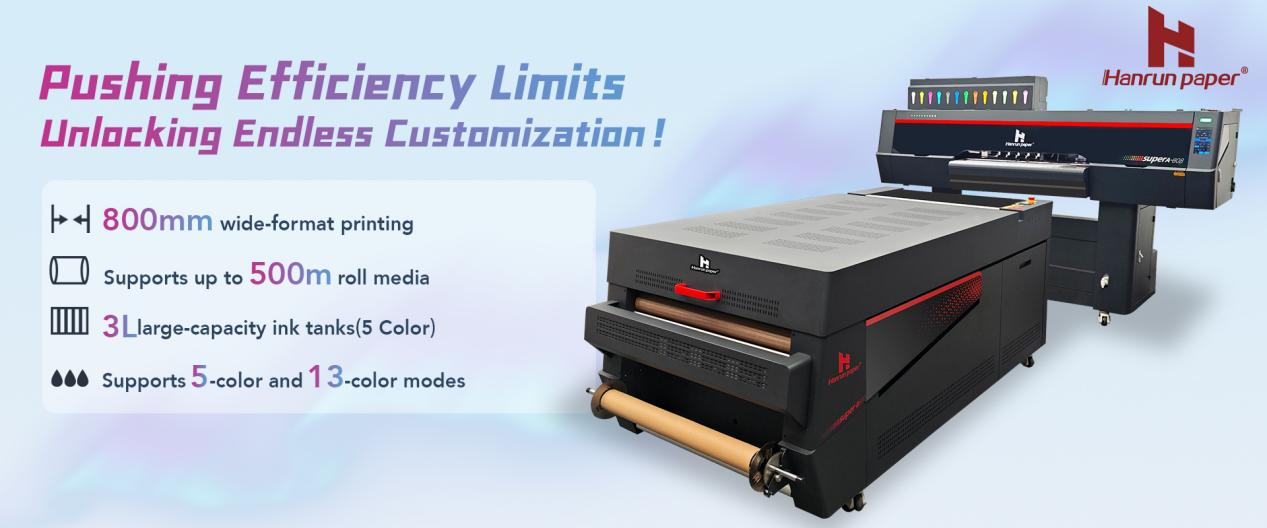
As a professional digital printing solution provider, Hanrun Paper believes that stable and high-quality DTF production requires more than a single product. It requires a complete, mature, and fully tested one-stop DTF printing solution.
Many customers choose to purchase DTF printers, inks, films, and powders from different suppliers in order to reduce purchasing costs.
Although each product may have good performance individually, different suppliers often use different formulas, manufacturing standards, and technical specifications. When these products are combined, compatibility issues may occur.
For example:
These issues not only influence final product quality but also increase:
Therefore, the real challenge in DTF printing is not the performance of a single product, but the compatibility and coordination of the entire DTF printing system.
During the DTF printing process, every material has its own function, while also affecting the performance of other components.
DTF ink is the foundation of image output.
High-quality DTF ink needs excellent:
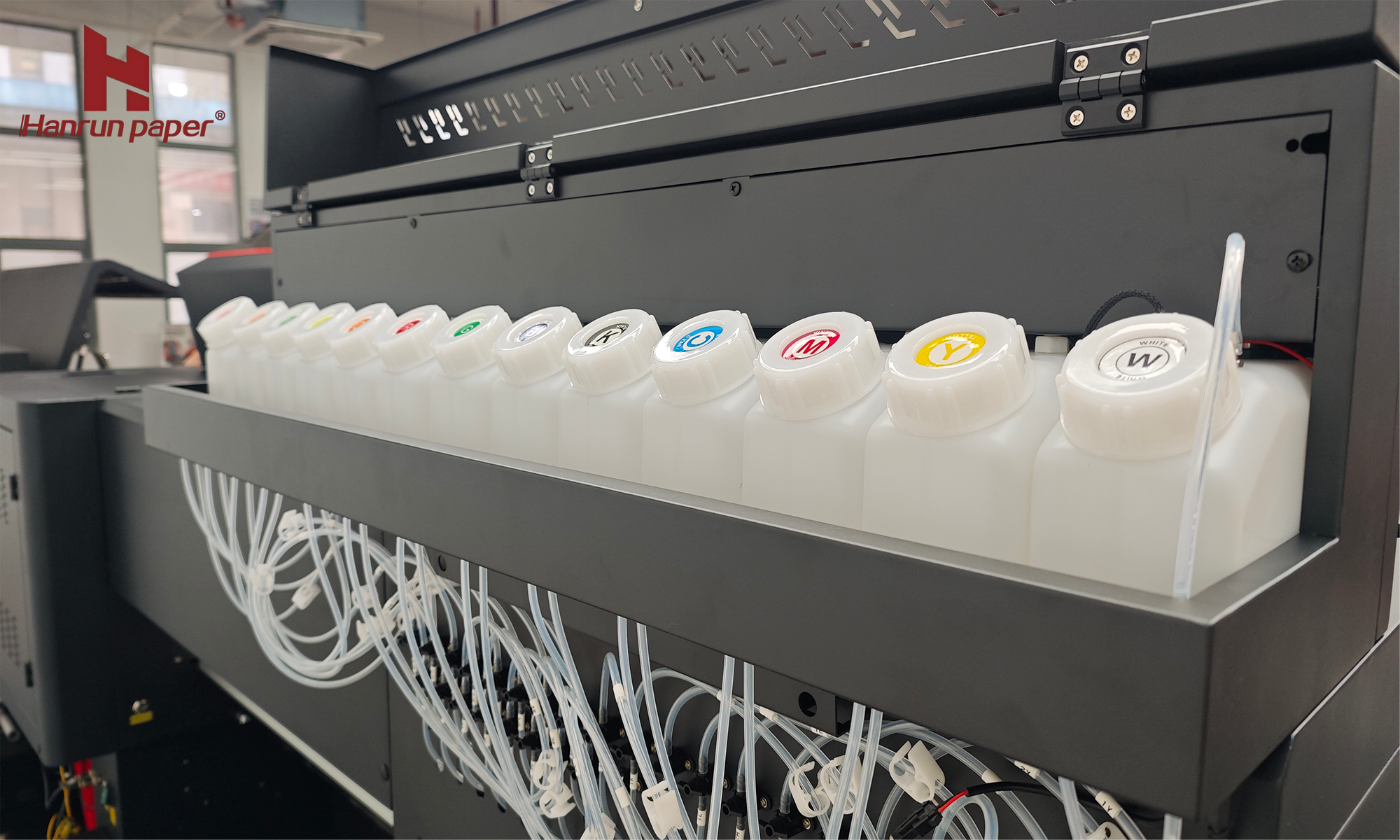
At the same time, the ink must be compatible with the printheads and printer system to ensure stable output during long-term production.
White ink requires even more attention because of its high pigment concentration. Professional ink formulation and a reliable circulation system are essential to prevent:
DTF film is not simply a carrier for printed designs.
The coating technology on the film surface directly affects:
Different DTF films have different characteristics in terms of ink absorption, release performance, and application scenarios.
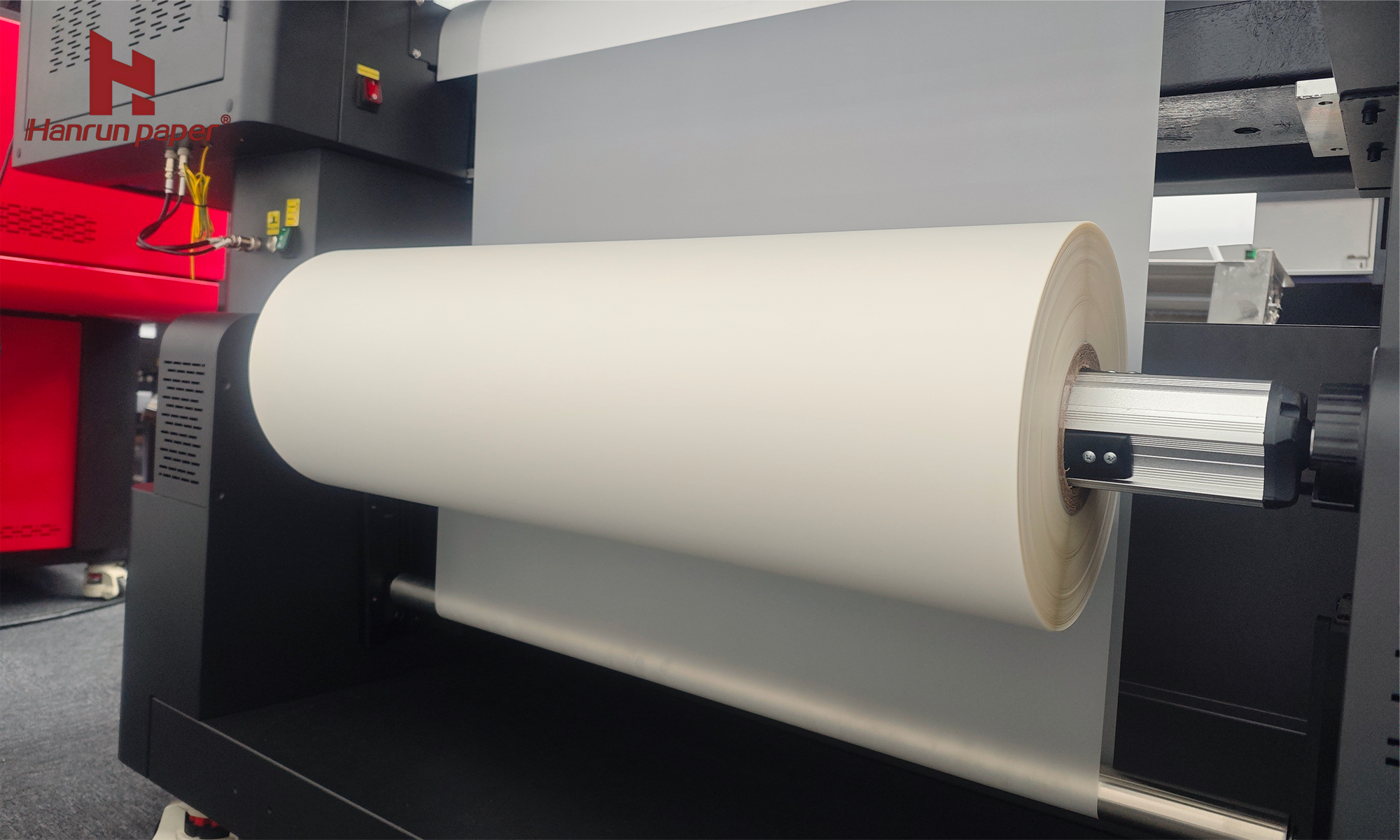
Without proper matching between film, ink, and powder, problems may occur, including:
It directly affects:
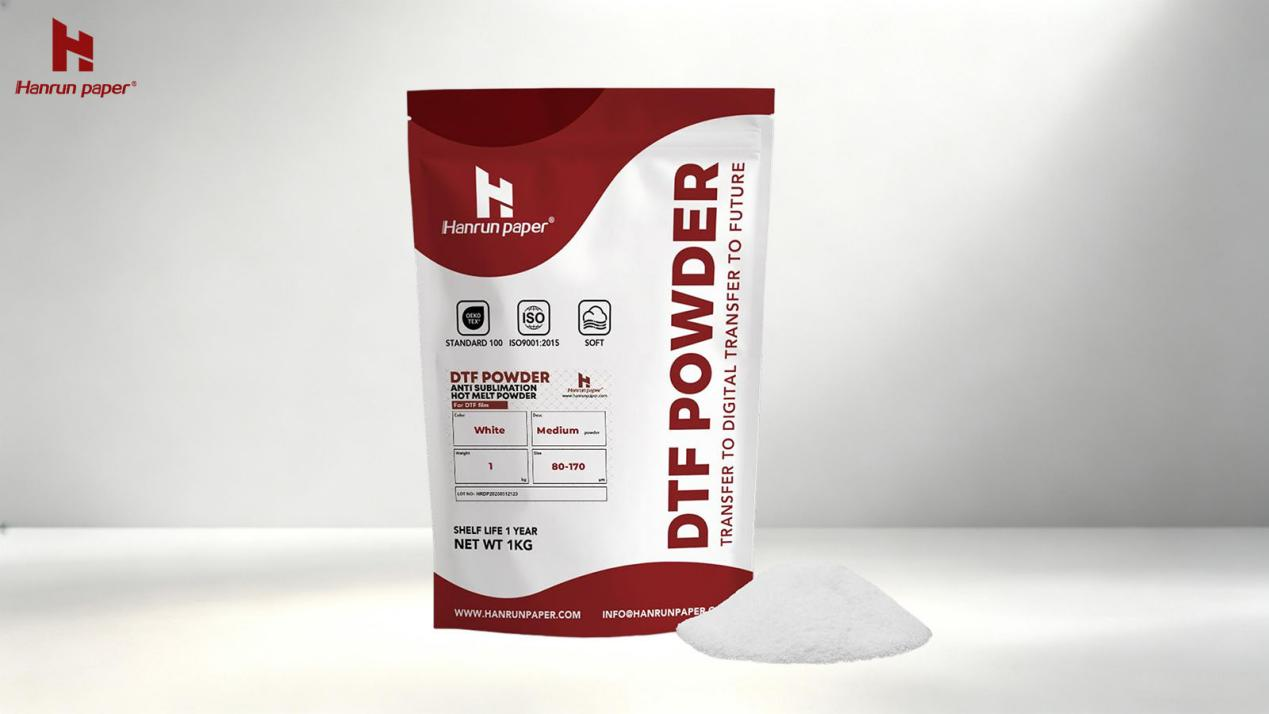
Different fabrics and applications require different powder performance.
A high-quality DTF powder should not only provide strong and long-lasting adhesion but also maintain a soft and comfortable hand feel, meeting the quality expectations of the apparel market.
Because DTF printing involves multiple critical processes, Hanrun Paper does not only provide individual machines or consumables.
Instead, Hanrun Paper focuses on customers’ real production needs and develops a complete DTF printing ecosystem solution.
Hanrun Paper provides:
✅ DTF printing equipment
✅ Professional DTF ink
✅ High-performance DTF transfer film
✅ Stable DTF hot melt powder
✅ RIP software support
✅ Technical guidance and application services
Through systematic matching between equipment, consumables, and printing processes, Hanrun Paper helps customers:
During product development, Hanrun Paper conducts comprehensive testing on:
This ensures that every part of the DTF workflow works together smoothly.
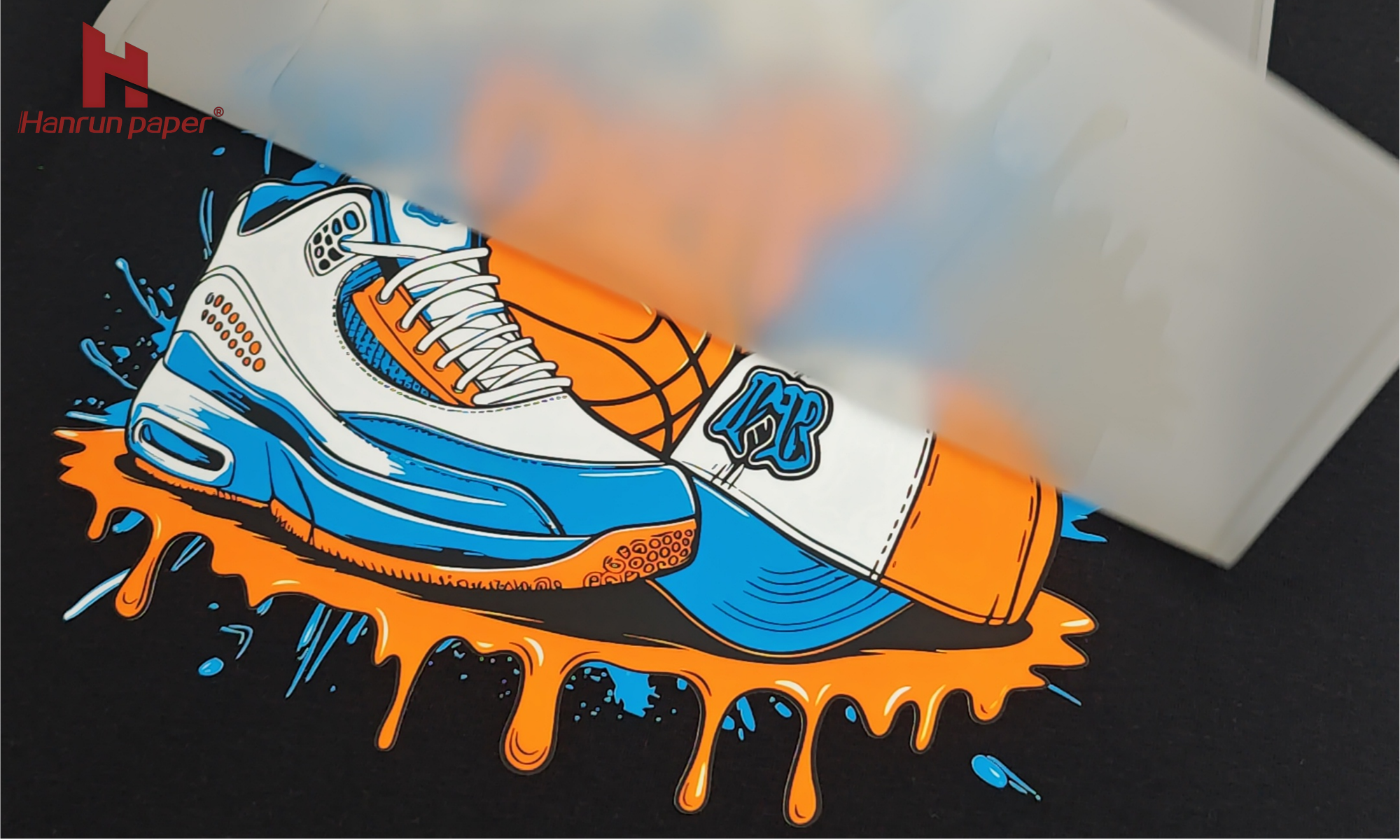
A complete DTF solution is not simply a collection of products. It is a fully optimized system designed for stable and efficient production.
Frequently Asked Questions About DTF Printing Solutions
Q1: Can a DTF printer work with ink, film, and powder from other suppliers?
Yes, it is possible, but extensive testing is required.
Different suppliers may use different formulas, production standards, and technical specifications. Mixing products from different suppliers may lead to unstable printing performance, reduced transfer quality, and adhesion issues.
Because DTF printers, inks, films, and powders need to work together.
A complete DTF solution has been systematically tested to reduce compatibility problems, improve production stability, and lower testing and adjustment costs.
Hanrun Paper provides a complete DTF printing ecosystem, including:
This helps customers achieve more stable and efficient digital printing production.
With Hanrun Paper’s one-stop DTF printing solution, customers receive more than individual products.
They gain complete production support, including:
Through a complete DTF ecosystem, customers can reduce material testing costs, improve production efficiency, lower operational risks, and achieve stable high-quality DTF production faster.
As the DTF printing industry continues to evolve, future competition will no longer focus only on individual printers or consumables.
The real competition will be based on complete ecosystems, technical capabilities, and total printing solutions.
Hanrun Paper continuously invests in digital printing technology development and combines equipment, materials, processes, and services to provide global customers with more stable, efficient, and professional DTF printing solutions.
Because outstanding DTF printing quality does not come from a printer alone.
It comes from the precise cooperation of every part of the complete DTF printing system.

